choose a skill cluster

skills & motivations
This section provides a breakdown of the inherent skills, learned skills and motivations/aspirations for each skill cluster. Inherent skills and motivations/aspirations combined are commonly defined as “soft skills” in the market.
inherent skills
- 1. problem-solving and troubleshooting
- 2. communication and teamwork
- 3. ability to adapt to changing priorities
- 4. curiosity
- 5. analytical thinking
- 6. spatial awareness
- 7. creative thinking
- 8. hands-on learning
- 9. logic
- 10. persistence and resilience
- 11. collaboration
- 12. interest in technology
- 13. attention to details
learned skills
- 1. operational efficiency
- 2. civil engineering
- 3. technical tools
- 4. electrical engineering
- 5. mechanical engineering
- 6. equipment maintenance
- 7. facility maintenance
- 8. safety and compliance
motivations/aspirations
- 1. passion for working with machinery, systems and structures
- 2. continuous improvement
- 3. problem-solving and innovation
- 4. economic and efficiency goals
- 5. sustainability and environmental concerns
- 6. career advancement and financial incentives
- 7. professional challenge and intellectual stimulation
- 8. teamwork and collaboration
- 9. impact on society and quality of life
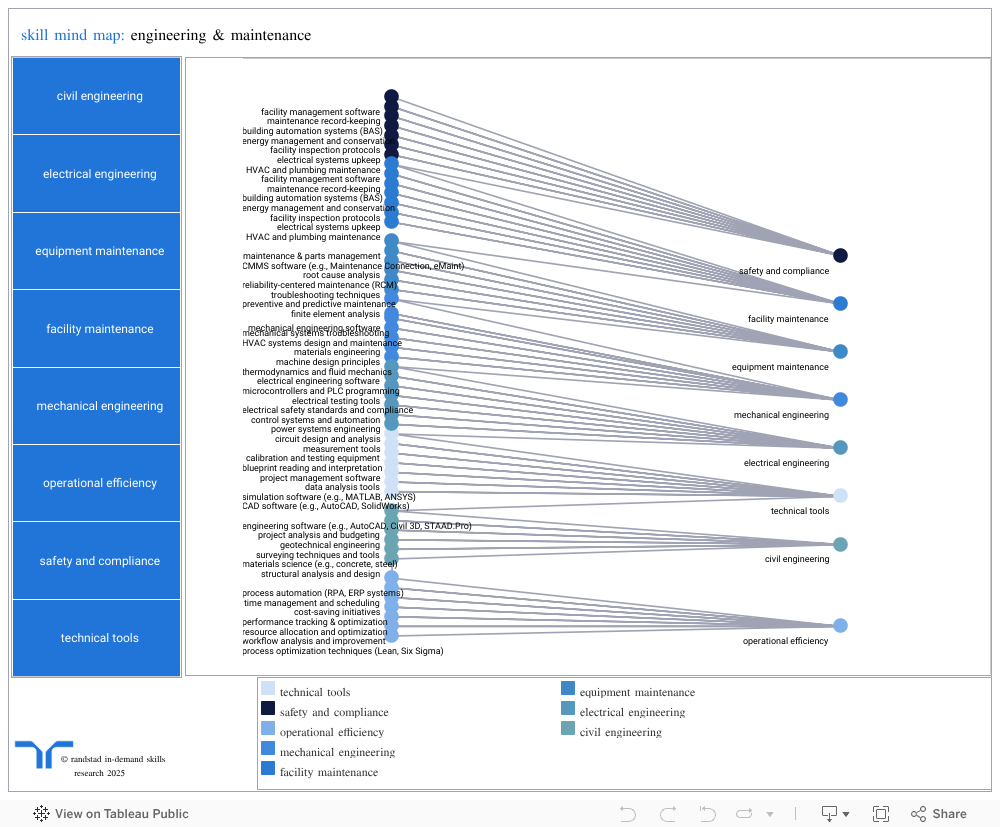
what it shows
The chart here illustrates the sub-level of learned skills required for engineering and maintenance in each of the 24 markets researched. The findings presented here are based on a combination of verified, normalized labor market data by market and granular, skill-based data sourced from professional social media networks and job boards, as well as career sites.
need to know
- The engineering and maintenance skill cluster comprises a combination of design, maintenance and management skills.
- Some of the most common skills within the cluster include design (such as CAD and related tools) as well as standards-based, hands-on engineering experience.
skills supply
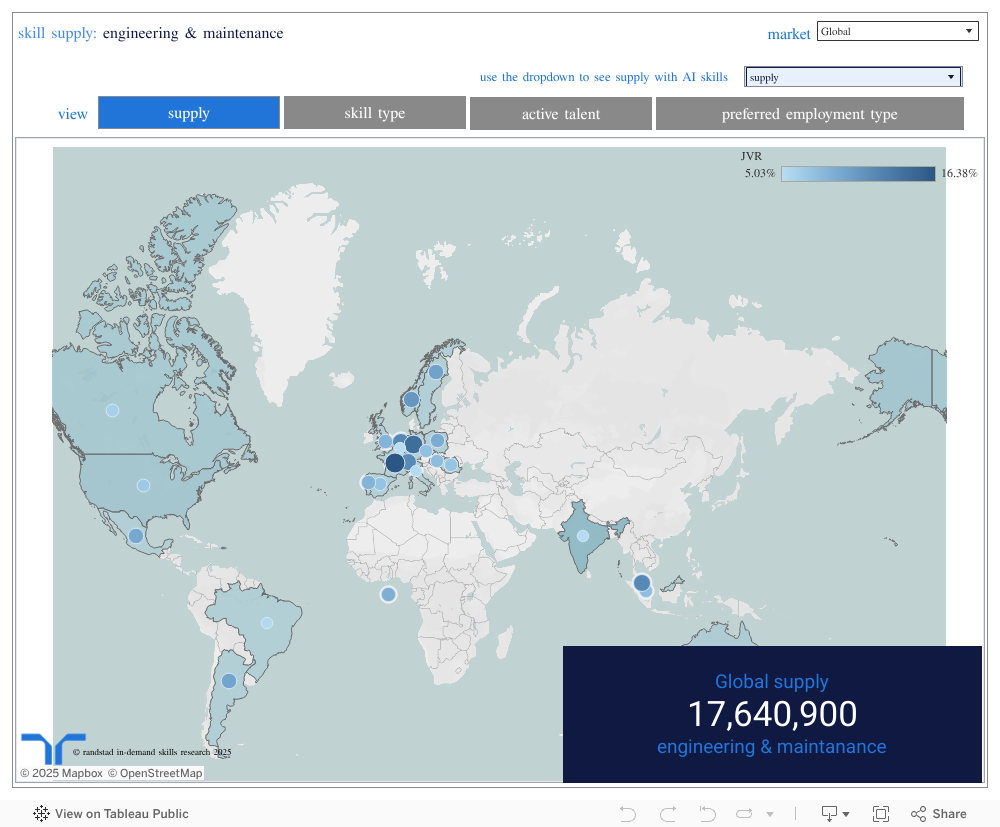
what it shows
Skills supply data indicates the total number of individuals who have the skills required for engineering and maintenance in each of the 24 markets researched. These figures are based on a combination of verified, normalized labor market data by market and granular, skill-based data sourced from professional social media networks and job boards, as well as career sites.
Use the chart to understand the availability of skills (“supply map”), availability of sub-skills (“skill type”), talent with recent job search activity (“active talent”), as well as the share of talent who prefer permanent or contract work (“preferred employment type”).
need to know
- Talent supply has grown 1.4% year over year, placing engineering ahead of non-technical clusters but behind IT fields.
- Talent mobility remains moderate at 14.8% and rising about 9% for professionals with AI skills. Less than half (43.5%) are actively exploring new roles.
- Only about 9% of engineers report working with AI technologies, yet adoption is rising gradually.
- Contractors make up 12.9% of the workforce; this is one of the lowest shares across all skill clusters and consistent with 2024 levels.
skills demand
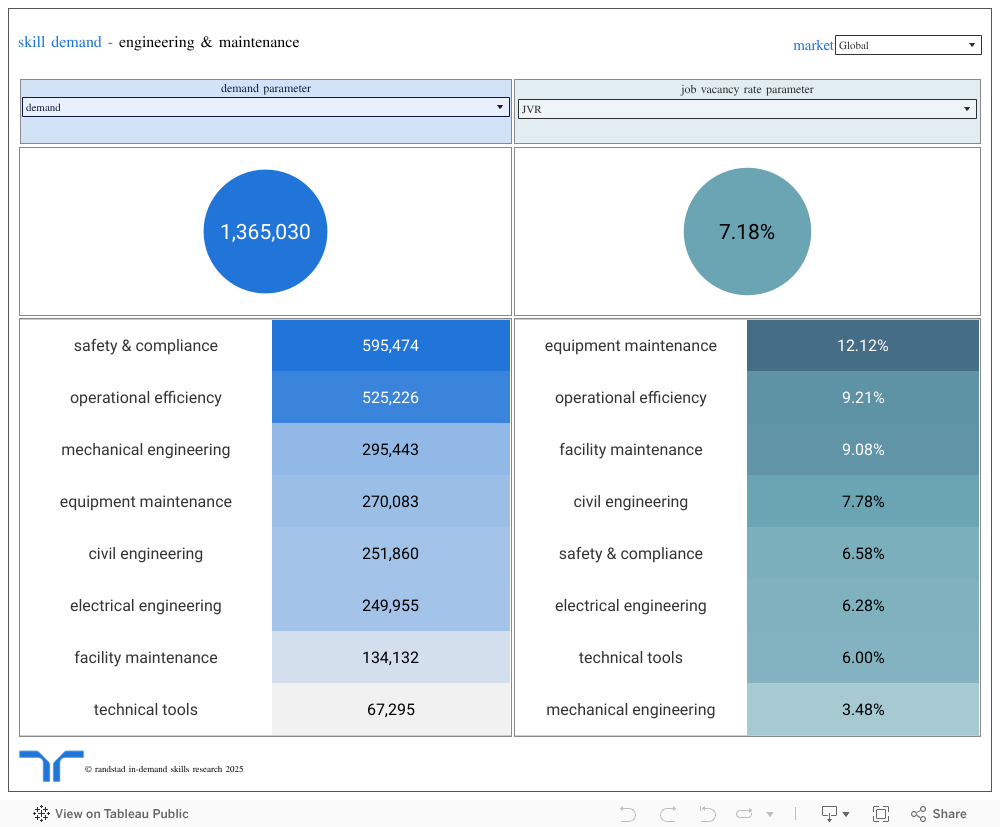
what it shows
Skills demand data indicates job postings that require engineering and maintenance skills in each of the 24 markets we researched. These figures are based on a combination of verified, normalized labor market data by market and granular, skill-based data sourced from professional social media networks, job boards and career sites.
See demand for each skill cluster by market, explore demand for sub-skills within each cluster or view the job vacancy ratio (JVR) — defined as hiring complexity — to understand market competitiveness for these skills. The higher the JVR, the more competitive it is to recruit. 2025 demand data takes all yearly advertisements into account.
need to know
- Global demand has fallen 18% after the surge reported in 2024.
- Hiring complexity remains elevated, with experienced engineer JVRs averaging 13% and maintenance role JVRs exceeding 18% in France and Germany.
- Demand for talent with AI skills is relatively low for this skill cluster, as employees are upskilling faster than employers require it. JVRs for talent with AI skills range from 1% to 3% across the globe.
- Equipment and facility maintenance continue to be the hardest sub-skills to fill, with JVRs exceeding 18% in markets like France and Germany.
compensation
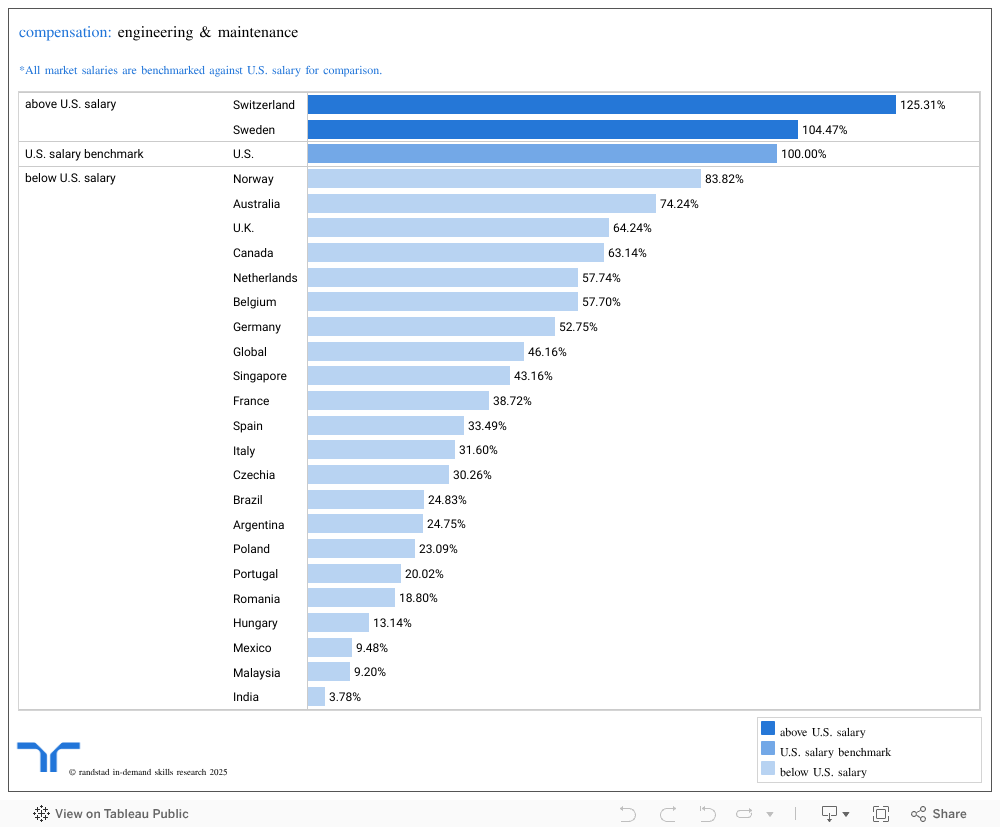
what it shows
The data included in this graph shows the average salary brackets in U.S. dollars for engineering and maintenance skills in the 24 markets examined by level. Compensation data is mapped and analyzed from combined sources providing current pay data.
Select the markets of interest to understand which salary ranges are considered competitive and in which markets you should recruit to stay within budget.
need to know
- Salaries have remained broadly stable year over year, with modest increases in EMEA and U.S. markets. APAC sees a 13% decline of average advertised pay this year.
- Compensation remains competitive for senior engineers, reflecting the ongoing scarcity of specialized technical talent.
- EMEA markets continue to see steady wage growth, supported by industrial modernization and infrastructure investment.
remote & hybrid working
what it shows
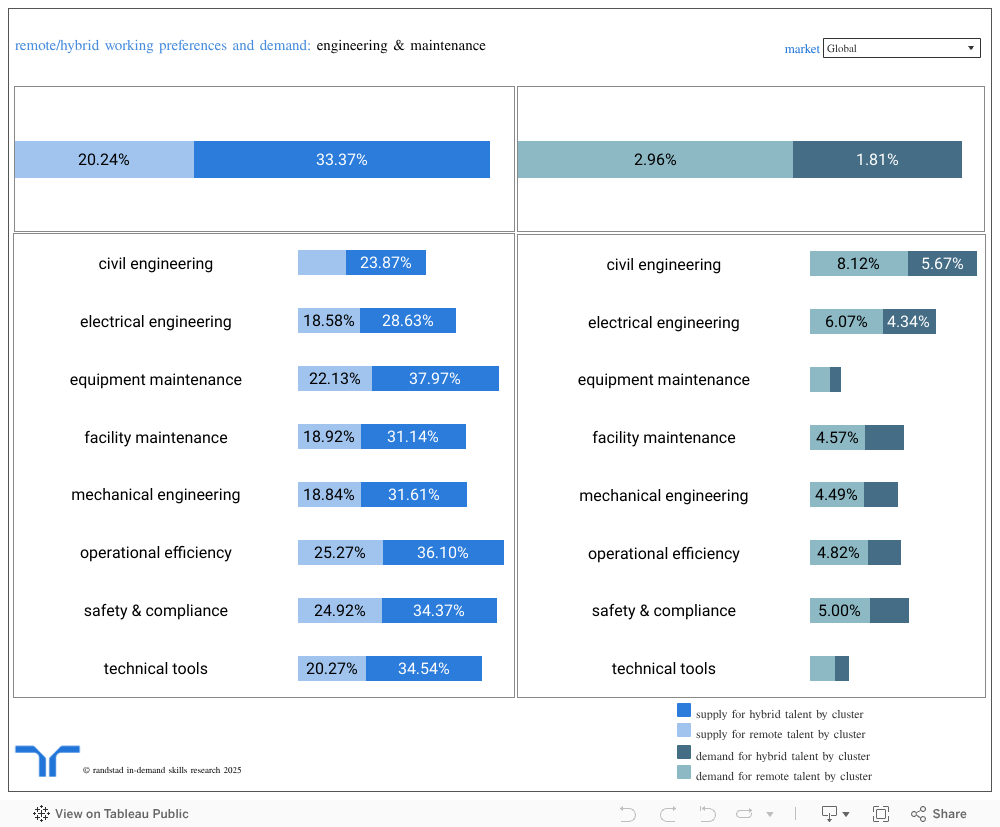
Remote working data shows the percentage of job postings that offer candidates remote or hybrid work for engineering and maintenance roles (noted as “demand”), as well as talent working preferences (noted as “supply”) in each of the 24 markets researched.
It is estimated that the actual share of remote/hybrid working opportunities is higher than advertised online. You can view the data by both skill cluster and individual skills.
need to know
- Remote roles remain limited at 3.0% of postings, up slightly from 2.0% last year. Hybrid roles have also grown marginally to around 2.0%, mostly in design and management functions.
- Talent preferences for remote or hybrid work have grown nearly 10% year over year, though engineering roles remain largely on site.
- Remote engineering opportunities are most common for design, simulation and project coordination roles.
take a deep dive into the in-demand skills research and find your competitive talent advantage.